
Kentucky Deeds and Their Record Trail
Every Kentucky county clerk records the land instruments for property lying in that county. The deed is the recorded conveyance. A related entry can explain the transfer. It may also point to a separate claim. KRS Chapter 382 covers conveyances, mortgages, plats, liens, and releases, and the instrument table sticks to deed-related types documented in Kentucky clerk guidance, because counties do not all share one menu or set of labels.
| Deed record | What it records | Why it matters |
|---|---|---|
| Conveyance deed | Transfer parties, consideration statement, legal description, and source of title | Shows the recorded transfer and points toward the prior instrument |
| Sheriff or commissioner deed | A transfer made through the named officer or court process | Connects a court or sale process to the land record |
| Personal representative deed | An estate transfer tied to the representative and its source authority | May put a probate transfer into the recorded chain |
| Affidavit of descent or heirship | Information about a deceased owner and the claimed heirs | Can bridge an estate event and a later land-record search |
A deed does not settle every claim. A recorded deed is only one instrument. A mortgage stands alone. So does a release, easement, or lien, since each is a separate recorded instrument with its own parties and legal effect. Read the instrument and its later references, because an index label alone cannot tell whether a lien was paid, whether a release covers the whole parcel, or whether the description matches the land in question.
Kentucky Deed Index Coverage Varies
No single statewide deed index covers Kentucky. Each county clerk runs land records differently. Many rely on eCCLIX or CCLIX. What you get varies: some counties offer full document images, others only index entries, and start dates differ from one deed series to the next. Start with the eCCLIX county availability selector. Pick your county before creating an account or paying anything. A statewide participation count says nothing about whether a particular county's oldest deed books are online.
Registration and subscriptions run through the eCCLIX central portal. Those portal charges are separate from county recording fees or certified-copy costs. Carroll County illustrates how local the rules are. A private resident there may run up to five searches a day on a public account. Commercial users take a subscription route. That policy is Carroll's alone. Other clerks may permit free counter inspection, per-image purchases, or office-only review instead.
MYTH: an absent online image never proves a deed went unrecorded. The index may sit behind an account gate. The county may use a different system, or the book may simply not be scanned. Check the clerk's page first. The eCCLIX central land-records page and its county selector show the access notes. Those notes make plain this service is no free, universal deed viewer.
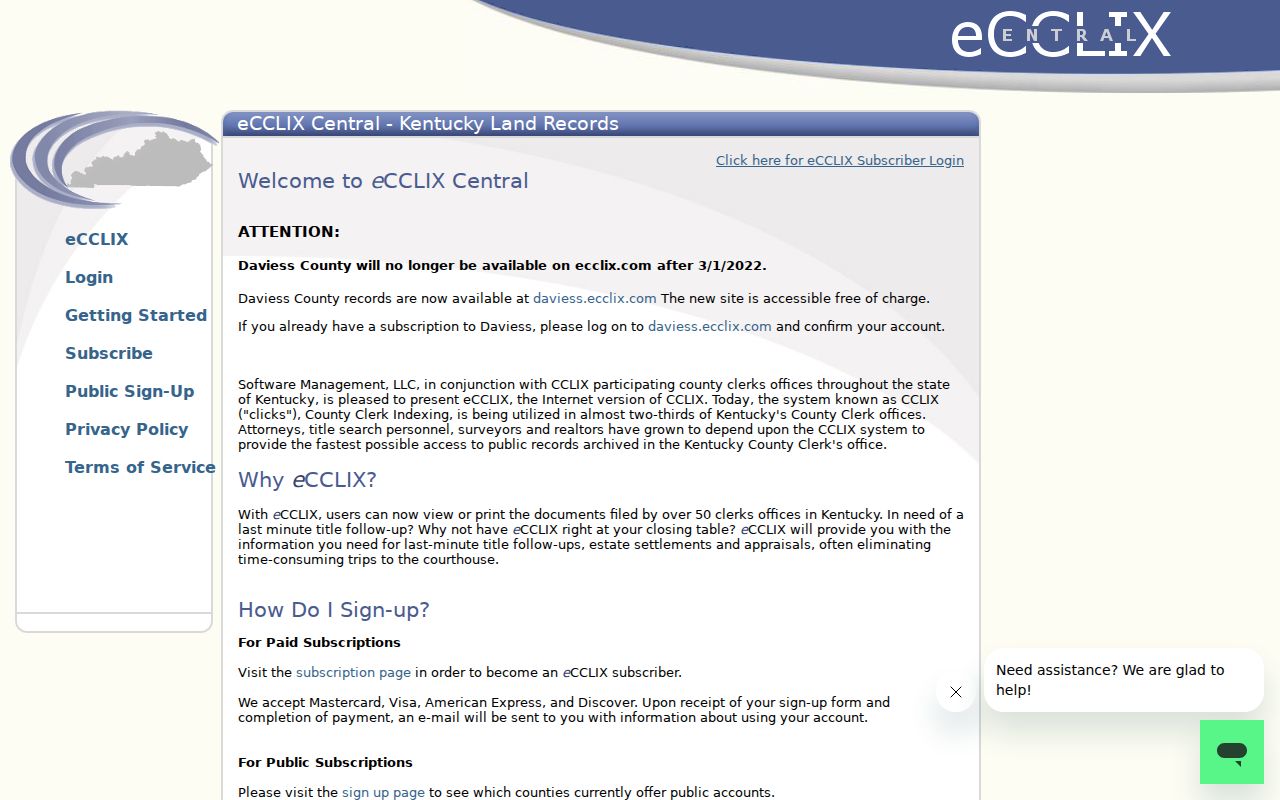
Pair the county selector with the clerk's own instructions, because both the service and the image range are county-specific.
Note: Check the selected county's coverage before comparing search results with an expected deed date or instrument image.
Search Kentucky Grantor and Grantee Indexes
Most Kentucky county deed systems keep two name indexes. The grantor index lists parties conveying an interest. The grantee index lists parties receiving it. For a chain of title, work both sides rather than trusting a single name query. A deed should cite its source of title, often an earlier deed book, page, date, instrument number, or party name. That source paragraph is usually the quickest bridge to the prior deed record.
- Start with the current deed or the best parcel identifier, then note the county, legal description, and names exactly as shown.
- Use the grantee index to find the deed by which that owner received the property. Open the image when available.
- Copy the prior grantor and the deed's source-of-title reference. Search the prior grantor in the grantor index, then find that party's earlier acquisition as grantee.
- Repeat while the legal description still matches. If the description points to an older county or an offline volume, note the break and follow that repository.
- Grantor
- The named party conveying an interest in the recorded instrument.
- Grantee
- The named recipient of that interest.
- Chain of title
- The sequence of recorded conveyances that traces a property's ownership history.
- Book and page
- A volume-and-page reference; another county may use an instrument or document number instead.
Names in the index may appear with initials, a spouse, a trustee, an executor, a commissioner, a company name, or “heirs” wording. Keep a search log. Log the county, spelling, index side, and result. For one property's mechanics, the Kentucky property search walks the address-to-parcel step before the deed index.
What a Kentucky Deed Index Entry Shows
The exact eCCLIX search form sits behind a login, and its public terms describe search modes rather than one universal county form. The table lists common search controls. A county may expose only some of them. It may use different labels or serve another system altogether.
| Search control | Type | Use and limit |
|---|---|---|
| Party or combination party | Name text mode | Search grantor and grantee separately where available; exact labels vary by county |
| Date or from-to | Optional date pair | Combination-party-by-date mode is described; coverage dates vary |
| Book | Text or number | Used with a page in Book/Page/Type mode |
| Page | Number | Pairs with the book reference; may open an index row or image |
| Instrument type | Optional dropdown or type control | The county list is not uniform; common types include deeds, mortgages, releases, liens, plats, and easements |
| County | Selection control | Choose a participating county on availability or subscription screens |
| Search, sort, and paging | Result controls | Submit, sort, paginate, print, or export behavior varies by county and account |
An index row often holds less than the document image. A county may show names, a recording reference, type, or a brief property description. Consideration and legal details may hide deeper. Source-of-title text usually requires opening the image. Treat this inventory as a check on a result. It is not a promise that every portal row carries all fields.
| Index detail | What to capture | Check in the image |
|---|---|---|
| Party names | Grantor and grantee, including indexed mailing details where shown | Compare names, roles, and signatures |
| Instrument type | Deed, mortgage, release, easement, lien, plat, or other county type | Read the document, not only the code |
| Recording reference | Recording date and book/page or instrument number | Copy the source-of-title and cross-reference text |
| Property description | Legal description or brief parcel reference, if indexed | Match the land and any attached exhibit |
Consideration or full value may live only in the deed image, not the index row. The row can omit it. Some systems separate signing and recording dates. An image may also be unavailable, redacted, or held behind an account. Preserve that distinction in your notes. The phrase “index entry found, image not available through this route” beats treating the entry as a full copy. The eCCLIX login page documents that account gate. INSIDER TIP: read a deed's source-of-title paragraph before you leave, because it often names the prior grantor and an earlier book, page, or instrument that narrows the next search.
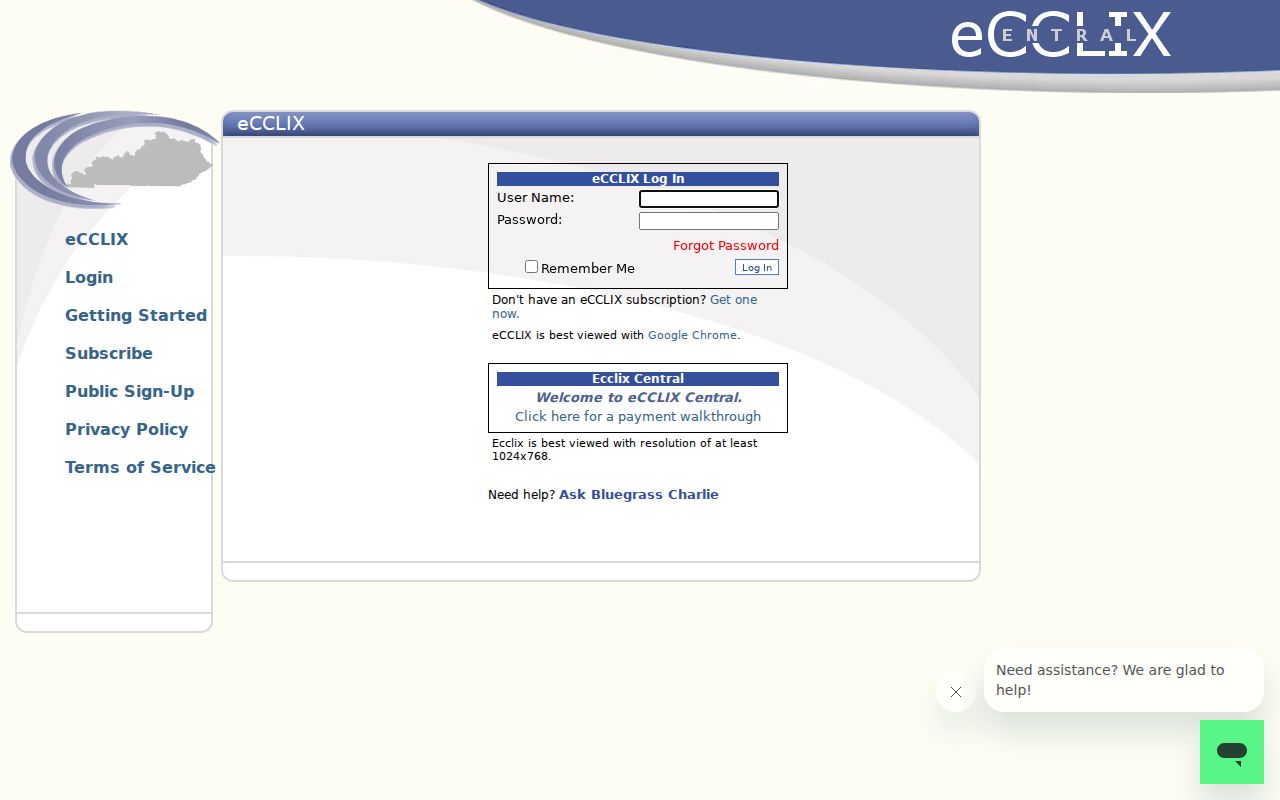
That login screen is an access step, not evidence of which instruments or years a county has indexed.
Kentucky Deed Books and Earlier Records
No statewide cutoff governs what you can reach online. Coverage depends on the county clerk: some post current deed images, others offer only an index from an earlier era. Some series simply stop before the deed books a full chain of title requires. The KDLA county inventory and its land-record guides catalog what the archives hold. Holdings range from original volumes and microfilm to deed books, tax lists, and wills. Its collection-level deed holdings run from about 1781 through 2018. The surviving series and their dates differ from county to county, though. Treat those endpoints as a scope, not as one continuous digital file.
An index entry can point to a book that was never scanned. Write down the book, the page, the county, the names, and the rough date. Then ask the clerk whether the original volume, a microfilm copy, or some other duplicate exists. For records that have left the county, the KDLA records request service handles searches. It wants the county, the series, the names, a date range, and any known book or page. KDLA estimates four to six weeks, plus request charges and copy or postage costs. Archive research moves at that pace.
Never assume the oldest row in an online index is the first deed ever recorded for a parcel. The screen may not show everything. Older volumes, tax rolls, wills, and records from a parent county may push the trail back well beyond what the screen shows.
Note: A missing online image can reflect portal limits, a paper volume, or a separate KDLA holding rather than a missing conveyance.
Access Kentucky Deed Records
Start with the county where the land lies. Each clerk's official page sets its own rules. The Kentucky Department of Revenue local-official directory routes readers to county clerk and PVA contacts. Access may take several forms. Depending on county policy and record age, it could mean an online index, an account or subscription, a visit to the clerk's office, or a copy request. Ask the clerk which route applies before sending payment. The Carroll County Clerk's eCCLIX page describes its resident and commercial access routes and its DocAlert option. An attempted-recording notice is an alert, not a finding of fraud.
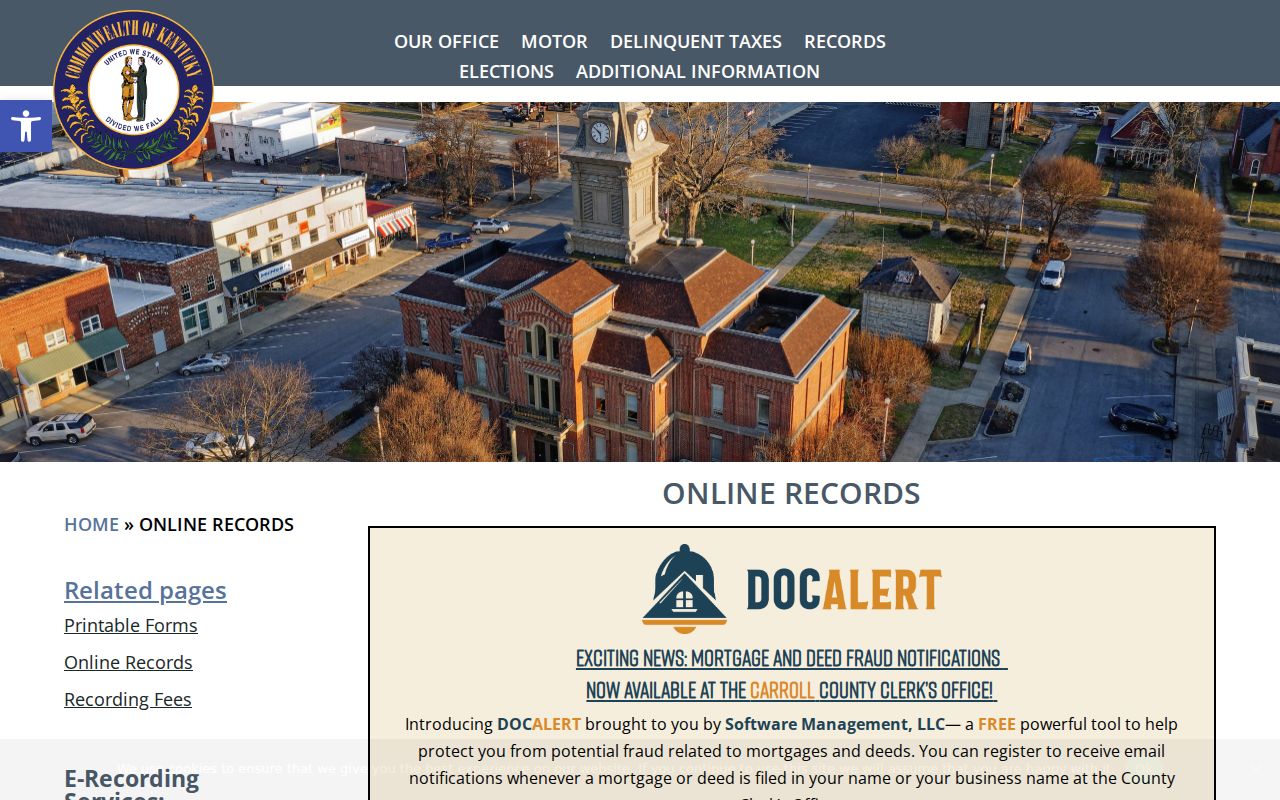
Carroll's five-search public-account limit belongs to Carroll alone. Any other county clerk sets its own access terms. Read that clerk's page before searching.
No image online? Call or write the clerk with the county, names, likely date range, and any book, page, or instrument number. A Kentucky resident may submit a written Open Records Act request for nonexempt records. A qualifying resident business or real-property owner may submit one as well. Delivery can be by hand, mail, fax, or email. Specialized copy, certification, and land-record procedures still govern. State law generally gives agencies five working days to respond. A deed image may take longer. Follow the clerk's posted instructions first, then ask whether a formal request is truly needed.
KDLA offers an online request route for historic records already transferred. It also maintains a research room in Frankfort. That room is open Monday through Thursday, and appointments are recommended. Confirm holdings and access rules before visiting. A library or historical society can help locate an old reference. Verify any land claim against the clerk's or archive's own deed record.
Request a Kentucky Deed Copy
Once an index identifies the instrument, gather the details. Note the county, parties, document type, recording date, and book/page or instrument number. Then request a certified or uncertified copy as needed. Confirm fees and payment with the clerk. Certified-copy and recording charges follow state law and local schedules. A portal subscription or image charge is separate. Never treat an eCCLIX access price as the cost of an official certified record.
If the record is not online, give the clerk enough detail to separate it from a name match. A legal description or parcel identifier helps. An address alone is not a deed description. For older records at KDLA, use its deed request process with the county, series, names, date, and reference. The source-of-title paragraph can locate the prior conveyance, while an index search alone may not supply the full chain.
Recorded does not mean guaranteed. A deed index reports recorded instruments; it is not a title opinion, survey, or proof that no unrecorded interest exists. Have a title professional review a transaction-sensitive ownership question.
Note: Specify county, names, approximate date, book and page, and whether you need inspection, a plain copy, or certification.