
Find a Kentucky Property Owner
A Kentucky property search moves from one record to the next. Start with an address or a parcel number. Pin down the county. The PVA listing names the tax-roll owner, which is a useful lead but not a title opinion. Take that name or the parcel ID to the county clerk's deed index. Match the grantee, the legal description, and the source-of-title reference line by line. A map locates the parcel. Only the clerk's recorded deed proves the conveyance.
- Use the Kentucky DOR local-official directory to find the PVA and clerk for the county where the land lies.
- Search the PVA by address or parcel ID and note the owner label, mailing address, situs, parcel key, and roll year.
- Search the county clerk's grantee index for the name on the PVA record; open the newest deed that matches the parcel description.
- Compare the deed date, parties, legal description, and source of title; check an exact entity name with the Secretary of State if needed.
A failed owner-name query proves nothing. The name may sit under a different spelling, belong to an entity, or be absent from a portal with partial county coverage. Vary the search key next. Then ask the local custodian about the index that office itself maintains.
Kentucky Property Owner Sources
Kentucky keeps no statewide deed or owner portal. Finding an owner is a county-by-county handoff. Each office answers one part of the question: the PVA keeps the tax roll, the clerk records deeds, and GIS adds the map. A statewide directory can point you to those offices, but it merges nothing.
| Record Source | Owner Clue | How Current / Access |
|---|---|---|
| County PVA | Tax-roll owner label, mailing and situs addresses, parcel ID | Roll and online mode vary by county; Jefferson's inspected owner search needs a paid account |
| County clerk | Grantee, grantor, recording date, instrument number, legal description | Current to the recorded instrument; eCCLIX covers participating counties, with clerk counter/request fallback |
| County GIS | Parcel geometry, map ID, nearby parcel IDs, sometimes an owner label | Local data date varies; map context does not establish title |
| Kentucky SOS | Entity name and status, officers or agent when shown | Business filing view, not a land record; not proof of a beneficial owner |
The Kentucky DOR local-official contact directory is the statewide route to county contacts. It covers both the PVA and the clerk. Use it when the county is unclear. It points you to the local record that actually carries the owner name. Parcel-card field labels vary by county. So confirm the local office's own layout before assuming a form.
- Owner of record
- The name shown by a specific PVA or deed record, read with that record's date.
- Grantee
- The person or entity receiving a deed conveyance as named in the instrument.
- Vesting
- The way an interest is held, such as by individuals together or by an entity.
- Situs and mailing
- The physical parcel location and the address where notices are sent; the two may differ.
Online access is just one channel. Call or visit the county PVA. Ask about an owner field or a parcel printout. Ask the clerk, too. Many courthouses offer a public terminal for the deed index. Staff can explain how to request an image or a certified copy. Older deeds sometimes fall outside the county portal. When that happens, the KDLA records-request service takes online or paper requests for transferred holdings. Each route keeps the search inside the office or archive that holds the record.
Note: Use the local PVA for assessment ownership and the clerk's record for the recorded instrument; their dates can differ.
Kentucky Owner Search Shortcut
Insider tip: when a deed lines up with the parcel, read its source-of-title paragraph before running another broad search. A Kentucky deed should cite the prior source instrument, such as an earlier deed office, book, page, or date where that applies. This line often names the earlier grantor and grantee outright. It can sharpen your next query in the clerk's index.
Where does the record live? KRS 382.110 puts the recordable instrument with the county clerk where the property, or most of it, sits. KRS 382.135 spells out what a deed must carry, including the parties' names and mailing addresses, the consideration, and the in-care-of tax-bill address, subject to statutory exceptions. No single statewide database ties it all together. eCCLIX and CCLIX cover participating counties only, and start years plus image access vary from county to county. Check the eCCLIX availability screen for the county you need before counting on it.
When an index is offline or an image is missing, a request at the clerk's counter remains the fallback. Treat the source-of-title reference as a lead, not as proof of a complete digital chain. For instrument types and copy access, see the separate Kentucky deed-record route.
Kentucky Entity Owner Records
Plenty of parcels sit in an LLC, a corporation, or a land trust. Others sit in an estate or several joint names. Copy the exact legal name from the deed or PVA record. Then run it through the Kentucky Secretary of State business search. The tool supports entity-name or ID search, an active-only filter, and advanced search. Filing images are available for records on or after September 15, 2004.
Read the business result with care. An officer or registered agent is not the beneficial owner. That person is not the occupant, and not automatically the deed's signer. Compare the filing with the instrument itself. A dissolved company can still appear in an older deed. An active registration proves nothing about the parcel in question.
Estate transfers can unfold in stages. A will or probate file may name the intended heir. The land-record bridge, though, is the clerk's recorded deed. It may instead be an affidavit of descent, personal-representative deed, or commissioner's deed. The PVA updates after that instrument. The named heir and the current tax-roll owner therefore need not match on the same day.
Kentucky Owner Roll Timing
The PVA name reflects the owner on the latest available assessment roll. Kentucky revalues property every year. Each parcel gets a physical inspection at least once every four years under KRS 132.690. Timing matters here. Compare a fresh deed against a tax record. Weigh the January 1 roll and the assessment calendar first. No universal rule sets how fast every county must refresh an online owner field after recording. The state publishes none.
What if a new deed and a PVA result disagree? Place the deed recording date beside the roll year and your search date. A transfer made after the roll date may not show up right away. DOR guidance allows a deed value to be considered for the following January 1 roll. That applies when the purchase occurred in the preceding year. No other change must control. That is not a promise of a same-day owner refresh.
Say "owner shown on the latest available PVA record" unless the clerk's newest deed has also been checked. Note: never label a timing gap as fraud without confirming both dates and the parcel match.
Note: A roll entry is a dated administrative field, so a recent deed may provide newer transfer evidence.
Kentucky Property Owner Alerts
Some Kentucky counties offer local deed alerts. Their notices go out when a recorded deed or mortgage matches a registered name. Carroll County's clerk describes DocAlert access with its land-record service. Boone County and Henderson County each publish their own property-alert routes for residents. Jefferson PVA has promoted a ClerkAlert notice. These are local services, not a statewide guarantee. An alert can make a filing visible. But it cannot stop a recording, prove fraud, or settle title.
The eCCLIX DocAlert registration route is one vendor page connected to county clerk alert programs. It shows the signup route only.
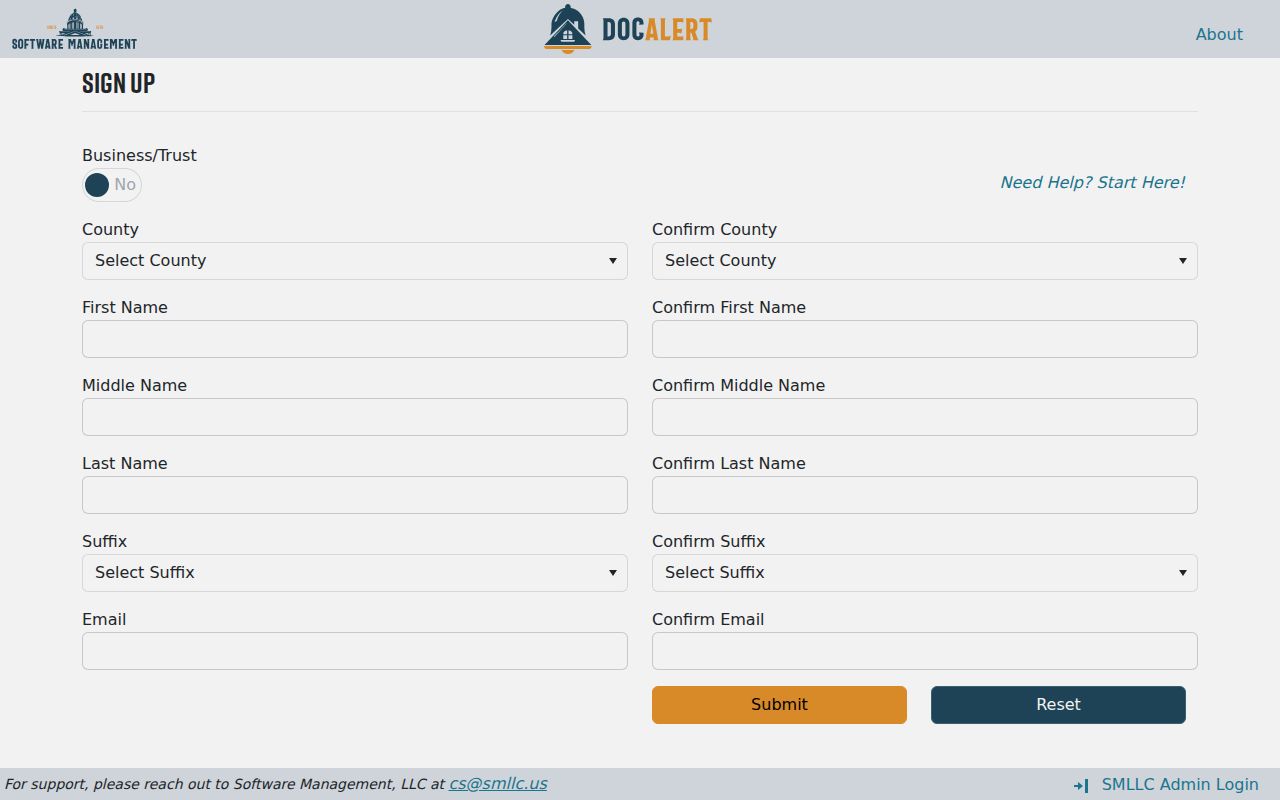
Carroll's official online-records page explains its local eCCLIX and DocAlert access. The Henderson County alert page describes another county's signup route. If an alert arrives, verify the instrument number and image with the clerk. Do this before acting on the message. Use a known county contact.
Kentucky Protected Owner Addresses
A mailing address on a tax roll is there so notices reach the right person. It is not permission to broadcast someone's contact details. Kentucky's Safe at Home program goes further for eligible participants, supplying a substitute address that can shield the real one in state and local records. Work with the substitute address as shown. Questions about lawful access belong with the records custodian or the program itself.
The Kentucky Attorney General's Consumer Data Protection Act information notes that public records fall outside the law's definition of personal data. That carve-out matters. It does not wipe a recorded deed from the books. No data controller gains authority over county land records because of it. When you report an ownership result, keep the focus on the parcel. Leave out signatures, private phone numbers, and contact details that have nothing to do with the property records themselves.
Limits of Kentucky Owner Lookup
A Kentucky owner lookup has real limits. It can show the name on a PVA entry or a deed record. It cannot tell you who actually lives in the house. It cannot expose a trust's private beneficiary, or certify that title is clear. A tax-roll label is an administrative owner field. The deed records a conveyance. Neither document alone settles every boundary or title question. Treating one as final can mislead you.
To confirm the name of record on a property right now, the current owner record route is the narrower path. It leans on the PVA roll paired with the latest deed in the deed records.
Lawful use. A name on the tax roll is not a title search, and an LLC or trust may appear as the owner. Use Kentucky property records for a legitimate property question; do not use them to stalk, threaten, or harass anyone or expose a protected address.
Note: Keep searches limited to lawful Kentucky property research and respect protected substitute addresses published by the program.